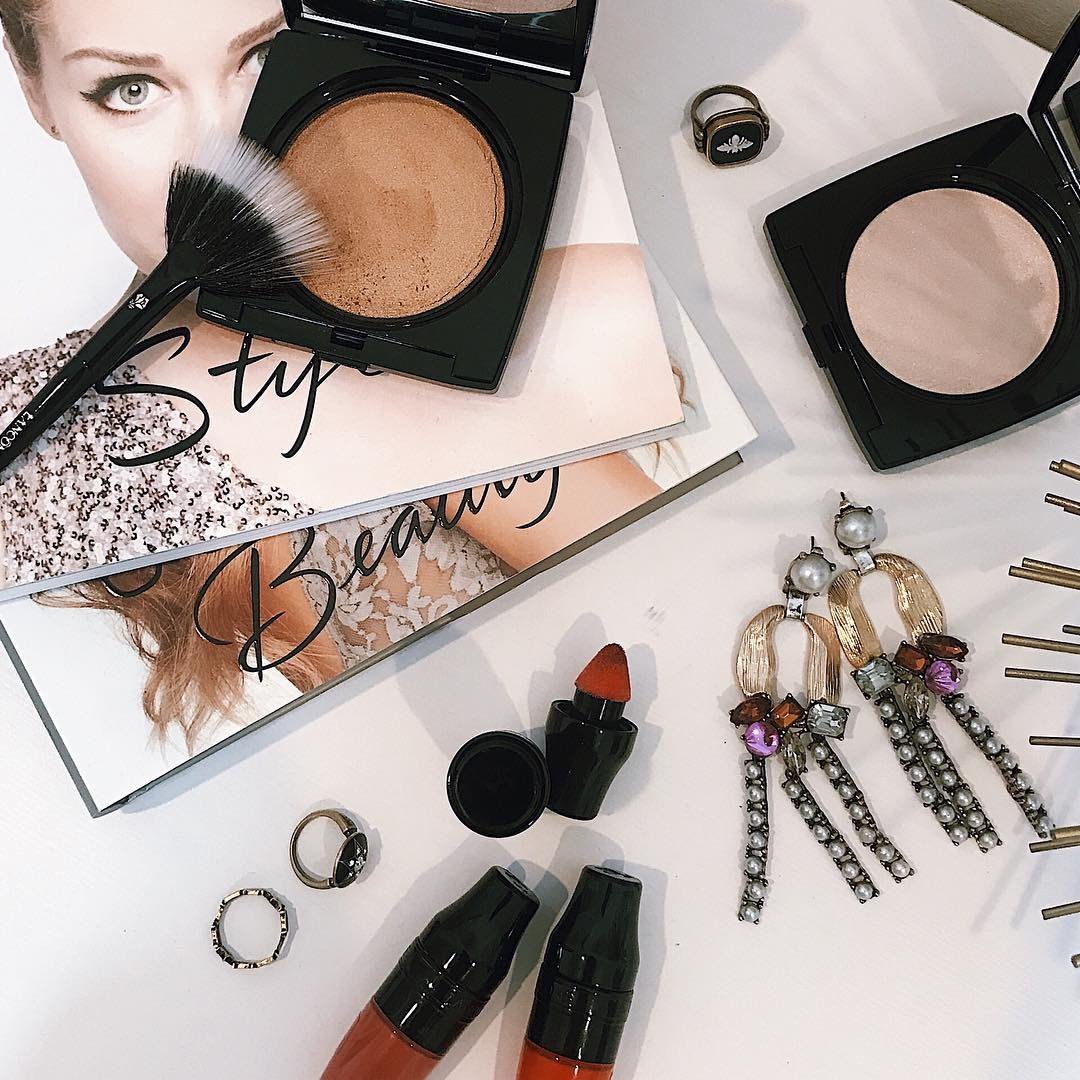
Facts about cosmetics aren’t something we typically think about each morning as we go through our daily beauty routine. Exploring beauty history facts and how historical cosmetics evolved will help you understand the modern beauty industry as it is today. Not to mention, you’ll quickly realize how lucky we are to have products that are safe and non-toxic! Take a look at this quick, fascinating breakdown of the history of makeup and cosmetic care across the ages.
1. Ancient Egyptians
There are many interesting facts about makeup throughout time, but did you know that the ancient Egyptians and Cleopatra were believed to be among the very first to use cosmetics as far back as 4,000 B.C.? Egyptians would fill in their brows and line their eyes with Kohl—a rich cream made from sheep fat mixed with powdered lead or antimony and soot. Ancient Egyptians were also famously known to take baths in milk and honey to soften and beautify their skin from head to toe, establishing foundational history of beauty care rituals that inspired future generations. If you want to explore more about beauty traditions and tips, visit our allwomenstalk makeup guide for expert insight.
Some of the primary cosmetics ingredients used by ancient Egyptians included:
- Kohl: Made from galena (lead sulfide), soot, and animal fat for dramatic eye lining.
- Ochre: Red clay crushed and mixed with water or oil to stain lips and cheeks.
- Henna: Plant dye used to paint nails and stain hair with rich reddish hues.
2. Romans & Greeks
Around 100 A.D., the Romans stayed beautiful by using wine as a cheek stain and painted their faces and bodies with chalk to achieve a pale, whitish look. They even created early acne treatments by combining barley flour and butter. The Romans also dyed their hair, but they used harsh lye—causing many people to lose their hair and forcing them to wear wigs. Meanwhile, the Greeks stained their cheeks and lips using vermillion and natural juice from berries. They darkened their lashes with black incense. These early practices form a major chapter in historical cosmetics records that historians study today.
3. The Middle Ages
Unlike today when sun-kissed tans are coveted, in the Middle Ages being pale was all the rage! Women wanted so badly to achieve a fair porcelain complexion that they allowed themselves to be painted with lead white or even bled by physicians in order to achieve the colorless look. Tattoos became popular during this time period in addition to vibrant colored eyeshadow, such as shades of blue, green, gray, and brown. As noted in section 1. Ancient Egyptians, eye enhancement has always been central to makeup history facts, but Medieval techniques shifted the focus heavily toward extreme skin pallor.
4. The 15th-16th Centuries
During this time period, royalty and their exclusive courts were the primary consumers of elaborate cosmetics. Fragrances were becoming immensely popular in France, and heavy whitening agents were being used for the face. Whitening products were composed of toxic compounds such as carbonate, hydroxide, and lead oxide—dangerous ingredients that accumulated in the body over time, causing severe health problems that sometimes resulted in muscle paralysis or death.
"Enhancing your beauty doesn't always mean going for the glossy look. More ladies now see the allure of a shine-free finish. With the right tools and techniques, you can also achieve a flawless, subtle glow. Learn how to master this trend by following these incredible matte makeup tutorials. Enhance your natural complexion without the unnecessary flash."
5. The 1800s
By the 1800s, almost all social classes wore cosmetics, but many popular formulations still contained toxic ingredients. Eyeshadows and lip stains contained poisonous elements like mercuric sulfide and belladonna. Zinc oxide, which is still widely used in modern sunscreens and powders today, was introduced during this century as a facial powder to safely replace deadly arsenic-based versions. Here is a quick snapshot comparing cosmetic safety and trends across different historical eras:
| Era | Key Ingredients Used | Primary Health Risks | | --- | --- | --- | | 4,000 B.C. (Egypt) | Kohl, lead, soot, sheep fat | Lead toxicity over prolonged use | | 100 A.D. (Rome & Greece) | Chalk, wine, lye, vermillion | Hair loss from lye, toxic metal exposure | | 1800s | Mercuric sulfide, belladonna, zinc oxide | Mercury poisoning, belladonna eye damage |As cosmetics evolved into the Victorian era, formulations gradually prioritized safety, paving the way for the modern beauty industry.
6. The 1900s
During the 1900s, the commercial cosmetics industry began to grow substantially. In 1913, mascara packaged as we know it today was developed by the French chemist and perfumer Eugène Rimmel. The initial product was a bit messy and inconsistent, but it was non-toxic and quickly gained widespread popularity across Europe. Worldwide acceptance of mascara arrived when T.L. Williams developed a similar cake mascara packaging for his iconic new company, Maybelline. In the later 1900s, makeup evolved into an empowering tool for self-expression. Women wore makeup that suited their unique personal style and taste rather than strictly adhering to rigid societal trends.
7. Present Day
The global cosmetics and beauty industries now total over $20 billion in annual sales and continue to grow consistently each year. Significant emphasis is placed on anti-aging formulas, skin barrier protection, and youthful radiance. Today, many different makeup looks are embraced—from minimalist natural routines to dramatic, theatrical artistry.
Although cosmetics have changed drastically throughout the course of history, the core goal to look and feel our best remains the same. Most of us would be completely lost without the brilliant invention known as makeup! Which development throughout the history of cosmetics do you think is most significant?
Keep exploring
Search AllWomenStalk for your next read.
Add allwomenstalk.com as a preferred source on Google to see more of our trusted coverage when you search.
Don't Miss the Latest Version
Get the latest stories, save favorites, and share with friends — all in one place.

New Earn badges & level up while you read
Create your profile. Earn badges. Level up your reading.
Join Allwomenstalk to track your streaks, collect badges, and earn XP for the things you already do—reading, sharing, and taking quizzes.
- 🔥Daily streaks with gentle boosts for 3, 7, and 30 days.
- 🏅Collect badges like Reader I–III, Socialite, and Quiz Ace.
- ⚡️Earn XP for reads, deep reads, likes, comments, and shares.
It’s free. Takes 30 seconds. Already have an account? Sign in.



Feedback Junction
Where Thoughts and Opinions Converge
2013-07-10T03:29:55.000Z
2013-07-10T17:20:26.000Z
2013-07-10T00:19:36.000Z
2013-07-09T23:24:48.000Z