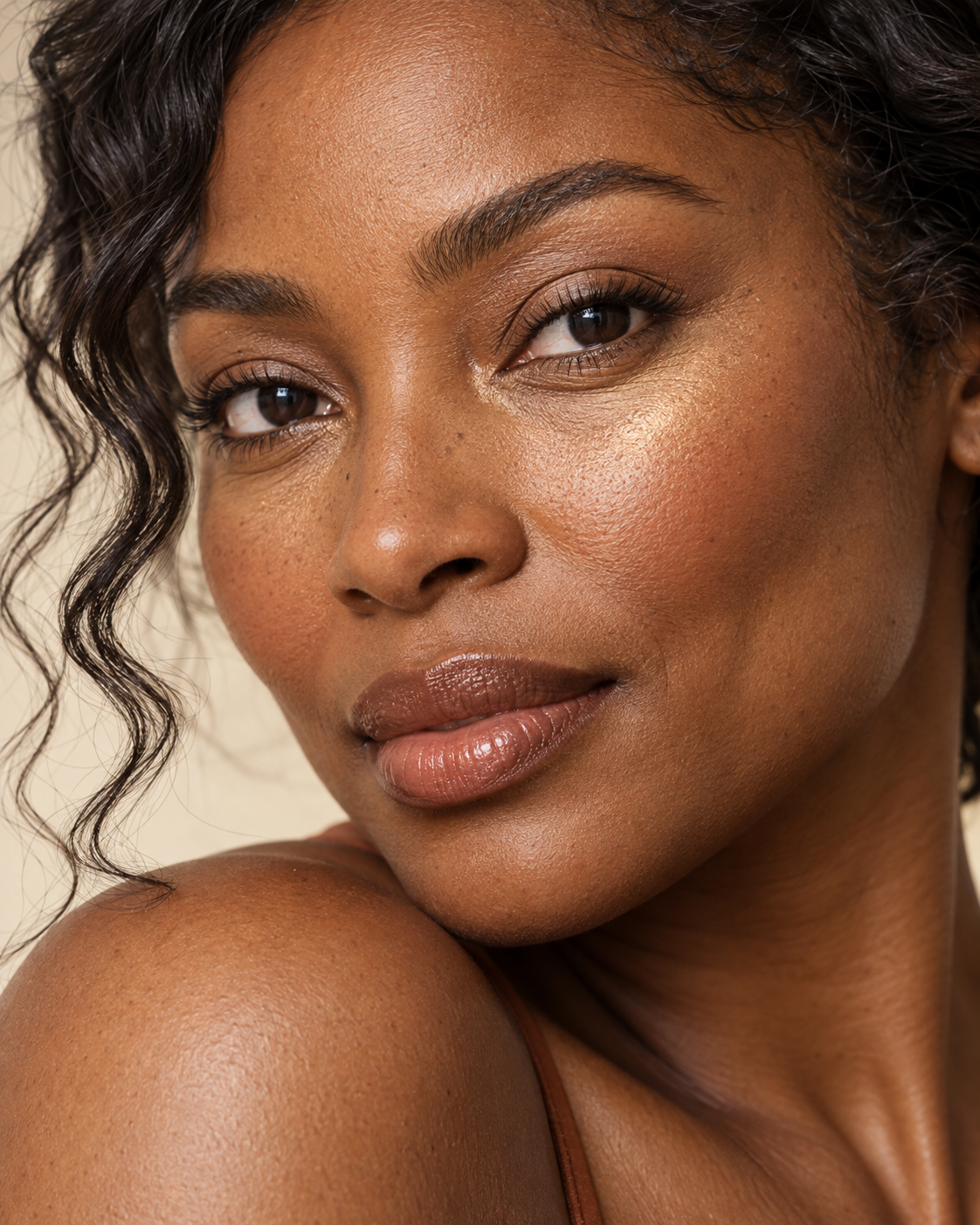
A tiny amount of subtle highlighter can make the under-eye area look brighter, but it does not cover dark circles like concealer. The trick works best when you want a light-reflecting finish rather than much coverage. If shimmer emphasizes texture or a pale shade turns your circles gray, a corrector and concealer may suit you better.
What is the under-eye highlighter trend?
It moves highlighter from the cheekbones to the area where you would normally apply concealer. The appeal is a lighter-looking finish with fewer layers. It is a makeup technique, not a treatment for dark circles, and a flattering result in one video does not establish how it will look in daylight on someone else.
Armani Beauty Australia's National Face Designer Jason Branigan tells Nine.com.au that highlighter brightens by reflecting light. His approach still uses a little concealer where coverage is needed. Makeup artist Ellen Malone, known as @AskEllenBeauty, is more skeptical: the wrong color or shimmer can emphasize exactly what a reader hoped to soften.
Highlighter, concealer or corrector?
| Product | Its job in the routine |
|---|---|
| Highlighter | Add luminosity; it does not provide the same coverage as concealer. |
| Concealer | Add targeted pigment coverage where you want it. |
| Color corrector | Adjust the appearance of a discoloration before concealer, using a suitable shade. |
You can combine them, but you do not need to. More layers are not automatically a better solution.
Who might like it—and who might skip it
Consider trying a small amount if you want a soft glow and do not need much coverage. It may also fit a minimal base routine where you want some darkness to remain visible rather than cover everything.
Adapt or skip it if:
- Your circles look grayer with a pale highlighter.
- You dislike the way shimmer draws attention to fine lines or texture.
- You want substantial coverage rather than a change in reflectivity.
- The product is not intended for the eye area.
Malone's caution is useful: a product can be pretty on the cheekbone and less flattering a few centimeters higher. Trying the trend is optional; keeping concealer is not failing it.
How to try it in four steps
The formula and shade ideas below follow Bustle's explainer and Branigan's advice in Nine.
- Choose a subtle liquid or cream. Avoid chunky glitter. Powder can emphasize dryness or creasing, according to Branigan.
- Stay close to your skin tone. Bustle suggests beige-champagne shades for fair skin and gold or copper for medium-to-deep complexions. Treat these as starting points; undertone and the individual formula still matter.
- Tap on very little. Blend a small amount on the inner under-eye skin outward toward the upper cheek. Keep it away from the lash line and the eye itself.
- Add concealer only where you want coverage. Blend the edges rather than automatically covering the whole luminous area. Our concealer application guide has more everyday technique ideas.
Check your result in ordinary daylight as well as the bathroom mirror. If you prefer the side without highlighter, that is useful information—not a reason to keep adding more.
"Enhancing your beauty doesn't always mean going for the glossy look. More ladies now see the allure of a shine-free finish. With the right tools and techniques, you can also achieve a flawless, subtle glow. Learn how to master this trend by following these incredible matte makeup tutorials. Enhance your natural complexion without the unnecessary flash."
A color-corrector alternative
Malone suggests peach for lighter blue-toned darkness and orange for deeper blue tones, followed by concealer or foundation. The correct depth matters: a vivid corrector that remains visible under your base is not the finish you were aiming for.
Start with a very small amount and adjust. Our color-correcting guide explains the cosmetic principle. This is about makeup color; it does not identify the medical cause of under-eye darkness.
Keep the eye area in mind
Use only a product intended for use around the eyes, following its label. Do not assume every face highlighter is eye-safe. Stop using it if it causes irritation. If irritation persists or you have eye symptoms, get professional advice rather than covering the area with more makeup.
Frequently asked questions
Can you put highlighter under your eyes?
A suitable eye-area formula can add brightness. Whether you like the result depends on the shade, texture and coverage you want.
Does it cover dark circles?
It changes how light catches the area; it does not replace concealer's coverage.
What formula should I choose?
A subtle liquid or cream without chunky glitter is the approach described in the sources. Check the eye-area directions.
Does concealer go over or under it?
In Branigan's version, a little concealer goes over the highlighter only where needed.
Who should skip it?
Anyone who dislikes the extra shimmer, finds it emphasizes texture, gets a gray cast or cannot find a suitable eye-area formula can stick with concealer or corrector.
Independent expert review of eye-area product guidance is pending.
Keep exploring
Search AllWomenStalk for your next read.
Add allwomenstalk.com as a preferred source on Google to see more of our trusted coverage when you search.

Don't Miss the Latest Version
Get the latest stories, save favorites, and share with friends — all in one place.

New Earn badges & level up while you read
Create your profile. Earn badges. Level up your reading.
Join Allwomenstalk to track your streaks, collect badges, and earn XP for the things you already do—reading, sharing, and taking quizzes.
- 🔥Daily streaks with gentle boosts for 3, 7, and 30 days.
- 🏅Collect badges like Reader I–III, Socialite, and Quiz Ace.
- ⚡️Earn XP for reads, deep reads, likes, comments, and shares.
It’s free. Takes 30 seconds. Already have an account? Sign in.





Feedback Junction
Where Thoughts and Opinions Converge